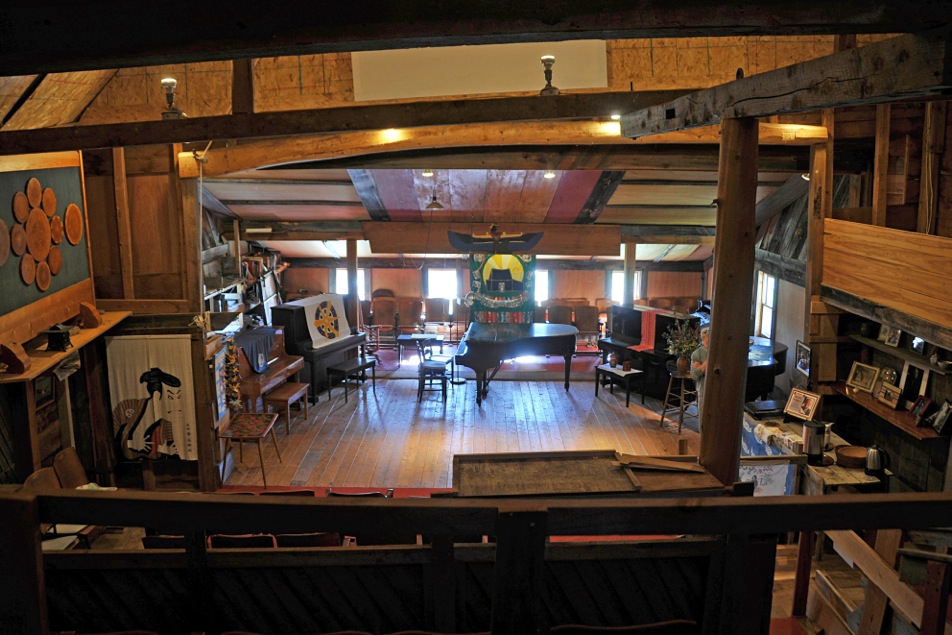
View some photos of the Saint Petersburg Center for Music Therapy and Alan's visit. Click here.
The American Music Therapy Association (AMTA) invited members to submit a video that completes the sentence "music therapy is..." What follows is a beautiful illustration of the many ways we talk about and experience the music therapy profession. Click here to view
Check out our Video Illustration Area, to view music therapy sessions. Keep in mind that each session is different depending on the type of therapy needed.
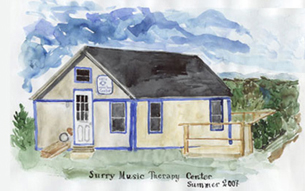
Alan Wittenberg Certified Music Therapist, provides individual and group sessions to clients of all ages at the Surry Music Therapy Center, located in Surry, Maine. Alan also visits and conducts music therapy sessions at:
schools and universities
nursing homes
day and residential programs
hospitals
throughout the state of Maine. Alan also does conference presentations and training in Japan and Russia at the centers that he founded.
MUSIC touches us when words cannot. It is instinctive
and intuitive in all of us, regardless of disability. It reflects who we are
and helps us to realize who we can be.
An International seminar at Surry Music Therapy Center with Japanese students from Nigata University
Alan discusses a first of its kind intro level online music therapy course for The Univeristy of Maine System
What is Music Therapy?
Individuals with physical, emotional, and cognitive difficulties find that music therapy opens new channels of communication and contact. Music as therapy brings joy, beauty, a smile and laughter as well as a calming and nurturing effect to some clients, while providing an outlet for frustrations for others. It helps to activate and enhance the memory and quality of life for elderly clients.
Music therapists work closely with and support the goals and objectives of psychologists, social workers, counselors, special education and speech, occupational and physical therapists. It is a creative, interactive, clinical, educational and rehabilitative treatment approach.
Music Therapy is an effective form of psychotherapy. It offers freedom of exploration and a new sense of self discovery as clients give sound and energy to emotions and issues that may be painful, confused or blocked. Each client is unique in terms of their psychological issues and special needs. Music therapy can reach clients that are resistant or relatively unresponsive to other treatment approaches.
“During the course of time in which you (work with my son) eye contact, vocalizing, words (as well as two word phrases) and tolerance for certain stimuli, greatly increases…This is just to let you know how valuable the type of therapy you do is. The part you play in (his) life is making it easier for him to cope with his world and opening it up to him.” Mother of a child with autism." click here to read more>>